
Capabilities
Automated Guided Vehicles (AGVs): Custom AGV Manufacturer for Production & Assembly
Built for Strength. Designed for Safety. Defined by Efficiency.
Standard and custom automated guided vehicle systems from 500 to 66,000 lbs, engineered to 70,000 lbs, designed, built, and integrated in the USA.
Premium AGV Solutions Backed by Real Manufacturing Expertise
At Invio Automation, we don’t just deliver AGVs; we deliver confidence. Confidence that you’re working with an AGV manufacturer who understands complex assembly, materials movement, and large-scale operations. Our focus on complete AGV systems (vehicle, controls, tooling, and fleet software) ensures your investment delivers measurable value.
Beyond AGVs: Your Trusted Partner in Advanced Manufacturing
Our customers come to us for more than just equipment. They come to us because they need a team that can walk the floor with them, analyze their current processes, and offer insight into what technologies will truly move the needle. They’re not buying hardware; they’re investing in capability.
That capability is built into everything we deliver: deep expertise in vehicle assembly, tooling integration, and manufacturing flow, carried by engineers, technicians, and industry veterans who live and breathe manufacturing. We embed ourselves in your process, identify opportunities, and tailor AGV systems that align with your unique production needs. That’s why customers return again and again.
You Don’t Need an AGV — You Need the Right Way to Build
Your AGV strategy should start with the product and process. What are you building? How is it assembled? Where can flow be improved? We’ll help you answer those questions and deliver the systems that make it possible, whether you need a single AGV cell or a complete automated guided vehicle system with fleet control.
Let’s reimagine your assembly line and move it forward.
Fourteen Standard AGV Platforms. Unlimited Configurations.
Most projects start from one of Invio’s proven standard platforms, base vehicles that have already logged production hours, configured with the tooling, powered lifts, and rotary functions your product needs. When the product demands it, we engineer fully custom vehicles around its exact footprint.
| Model | On-deck capacity | In-tow capacity | Drive configuration |
|---|---|---|---|
| Light Duty | |||
| LD1500 | 500 lbs | 1,500 lbs | Forward on path, reverse dead-reckon |
| E3500 | 1,000 lbs | 3,500 lbs | Forward on path, reverse dead-reckon |
| E5000 | 1,000 lbs | 5,000 lbs | Forward / reverse |
| Mid Range | |||
| TD5000 (36″ / 48″) | 3,500 lbs | 5,000 lbs | Forward / reverse / 360° zero-turn |
| SDLB8000 | 8,000 lbs | 8,000 lbs | Forward, low-boy deck for lift / rotary tooling |
| SDRS8500 | 8,500 lbs | 12,500 lbs | Forward with stop-and-turn, rear steer |
| SD8500T | 8,500 lbs | 8,500 lbs | Forward with stop-and-turn, tugger |
| Heavy | |||
| DD10000 | 7,500 lbs | 10,000 lbs | Omni-directional incl. crab and side motion |
| DD12500 | 7,500 lbs | 12,500 lbs | Omni-directional |
| DD15000 | 7,500 lbs | 15,000 lbs | Omni-directional |
| DD25K | 25,000 lbs | 25,000 lbs | Omni-directional incl. crab and side motion |
| Super Payload – engineered to 70,000 lbs custom | |||
| HD66K | 66,000 lbs | 66,000 lbs | Heavy platform |
| POD custom base | Custom | Custom | Application-defined |
Every standard platform runs Allen-Bradley or Siemens PLC controls with onboard HMI, 124Ah battery capacity with 40A opportunity charging, up to 360° safety scanner coverage with overhead Z-scan, speeds of 15 to 150 FPM, and positional accuracy of ±0.5″ (13mm). From light-duty unit load AGVs at 500 lbs to the HD66K super-payload platform at 66,000 lbs, with custom vehicles engineered for payloads up to 70,000 lbs.
Why Invio?
Robust
Portfolio
Invio Automation offers a robust portfolio of automated guided vehicles (AGVs), built on the proven technologies of Eckhart, Inc. and Auto Craft Tool & Die, Inc. These solutions are purpose-built for high-growth sectors including mobility, automotive, and advanced manufacturing. Every vehicle is designed and built across Invio’s multi-site Michigan facilities, with New Baltimore serving as our AGV competency center. As a domestic U.S. design-build manufacturer, Invio designs, builds, and integrates its own vehicles.
Seamless
Integration
Our AGVs optimize material flow, reduce manual handling, and improve safety, while integrating seamlessly into your wider production system. We combine complete AGV systems with semi-automated tooling, lift assists, and lineside automation to drive operational efficiency and long-term scalability.
Vertically Integrated Supply Chain
As teams invest in automation to enhance quality and throughput, Invio stands out as a one-stop partner. By consolidating controls, robotics, material handling, and tooling expertise under one roof, we eliminate the overhead of multiple vendors: one manufacturer, one integrator, one accountable team from vehicle design through commissioning and service.
AGVs
A long term track record of scale & custom development
5 Million
annual uptime hours of our AGV fleets across all of our customers.
70,000
pounds is the maximum payload we can engineer a custom AGV to carry.
1999
our first AGV deployment into the Fortune 500 environment.
500+
team members deliver support and service.
Purpose-Built AGVs for Complex Vehicle Subassemblies
We specialize in high-value, high-precision AGV subassemblies across the full vehicle architecture:
- Engines & Battery Power Units: Whether it’s a compact car engine or a large generator/diesel engine, our AGVs are built to safely transport and position powertrain components with exacting control.
- Chassis Systems: Designed for heavy-duty loads and precise placement, our AGVs support complex chassis assembly and integration.
- Transmissions & Driveline: From automated handling to precision staging, our AGVs streamline the movement of these essential systems within your assembly process.
- Axle & Suspension Assemblies: Supporting front and rear axle lines, our vehicles are optimized for ergonomic delivery and efficient line-side handling.
Chassis Mobility
Process-Integrated AGVs for Smarter Manufacturing
Our AGVs can be customized to support and perform a range of critical production processes at the point of need, including:
- Fluid Fill: Cooling, fuel, hydraulic, or transmission fluids; AGVs can incorporate automated fluid fill for real-time production.
- Welding: From precision spot to structural welding, AGVs integrate with welding technologies and your manufacturing flow.
- End-of-Line Testing: Execute or deliver to test stations with automated logic to ensure every unit meets spec before moving forward.
Serving the Industries That Move the World
Invio Automation delivers custom AGV solutions where precision, scale, and flexibility are essential. From heavy equipment to diagnostics, our AGV systems are purpose-built for complex manufacturing.
Where We Work:
Agriculture, Defense, & Construction Equipment
Robust AGVs built to handle oversized, high-mass components, supporting safe, efficient assembly.
Heavy Transportation & Aerospace (Non-Automotive Transport)
AGVs engineered for scale, weight, and complexity across large transport and aerospace systems.
Automotive (Mobility)
From EV platforms to ICE powertrains, our AGVs support high-throughput, flexible assembly and subassembly operations.
Energy Systems
Custom AGVs for solar, wind, HVAC, whole-home generators, and data center infrastructure, optimized for responsive production.
Battery Cell & Module Manufacturing
Precision handling and safe transport for energy-dense components to support scalable production.
Medical Imaging & Diagnostics
Cleanroom-compatible AGVs enabling precise movement of sensitive devices during production.
AGV Capabilities We Deliver
Scissor lift for a variable height assembly process
Tapeless navigation
Power roller integration
Controls and Guidance
- PLC-controlled fleet manager, master control panel (MCP), and onboard PLC in every AGV
Siemens or Allen-Bradley PLC systems, others on request
Wireless systems including Prosoft, Anybus, Phoenix, and Siemens, with cart-to-cart Wi-Fi communication (2.4/5 GHz) on customer or stand-alone networks
Guidance options to suit every budget and environment:- Magnetic tape guidance, the proven, economical standard for path-following assembly lines such as chassis, engine, transmission, and suspension builds
- In-floor magnetic bar, a more durable tape alternative for the same fixed-route assembly applications
- Optical guidance following tape or painted line, suited to high-wear floors, facilities that restrict permanent floor-mounted guidance, or environments hostile to magnetic media
- Marker-based optical navigation using barcode, dot-matrix, or ident markers
- Natural feature navigation, tapeless guidance from your existing plant environment, best suited to multiple pick-up and drop-off points or warehouse-style layouts
Vehicles designed in accordance with ANSI/ITSDF B56.5-2024, the American National Standard for driverless, automatic guided industrial vehicles; control panels built to UL 508A.
Hardware / Software
- Open-architecture programming and access to logic (core safety and heartbeat protected)
- Invio’s internally developed fleet management system, with the Master Control Panel acting as traffic controller across the fleet
- Integration with your MES and SCADA platforms rather than replacing them, with Ignition dashboards delivered for AGV data visibility at the MCP
- Full array of safety systems: safety scanners, e-stops, push and touch bumpers, position and tooling-state behavior controls
- Battery management systems and sleep-mode capabilities maximizing energy performance
- Opportunity charging in side-mount, underbody, and in-floor configurations, using conductive and inductive methods
Mobility and load Carrying
- Direct-load (unit load) AGVs with tooling built onto the vehicle deck for product holding
- Tuggers with lift and tow systems pulling material delivery carts or trains
- Full array of drivetrain options, from basic FWD/REV with L/R steer to omni-directional movement including crab and side motion
- Tunneling AGVs with a companion or support cart carrying the product tooling
Tooling
- Custom-built AGV tooling for customer product assembly using GD&T strategy
- Powered lift and tilt options for accessibility, ergonomics, and collaboration with lineside lift assists and torque arms, programmable by station and employee
- Powered and manual trunnions and rotation tables, programmable position by station
- Factory information systems integration and error proofing
- Full integration to lineside automation, robotics, and material handling tooling
What We Offer: Accessories, Peripherals, and Components
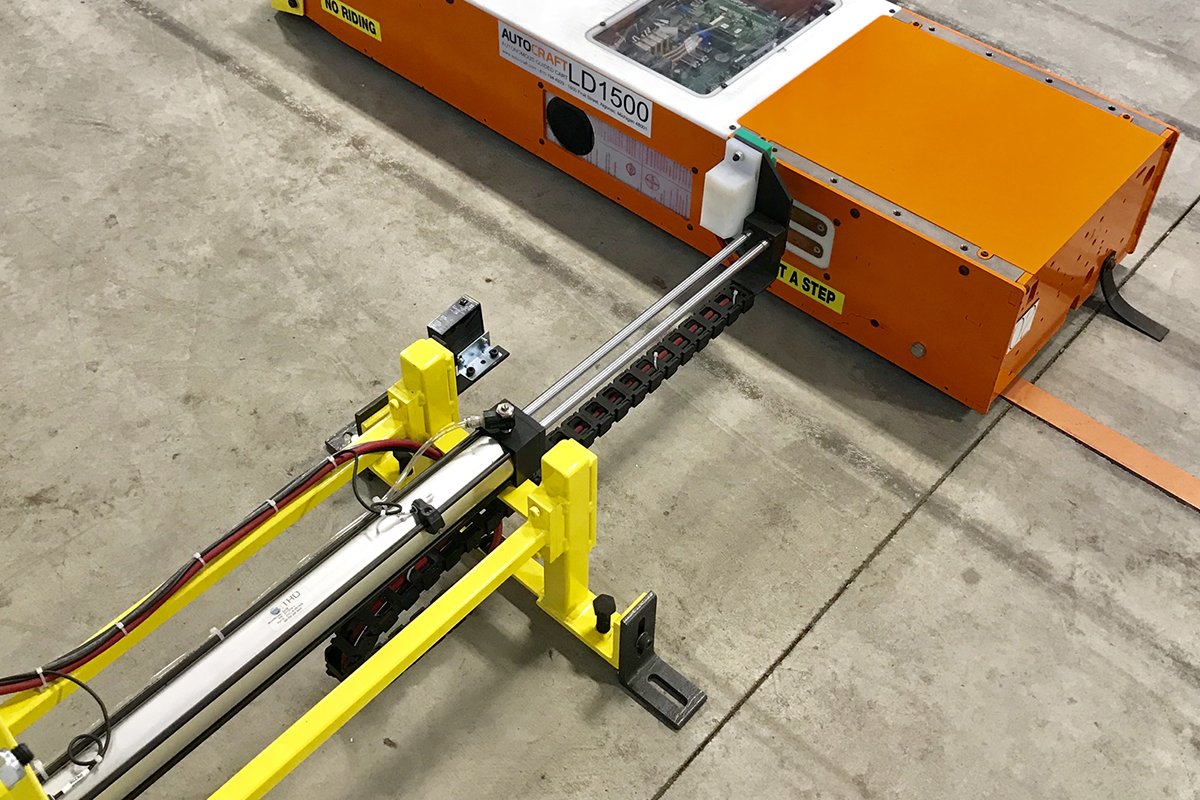
IntelliCharger for intra-process charging. Underside and inductive options available.
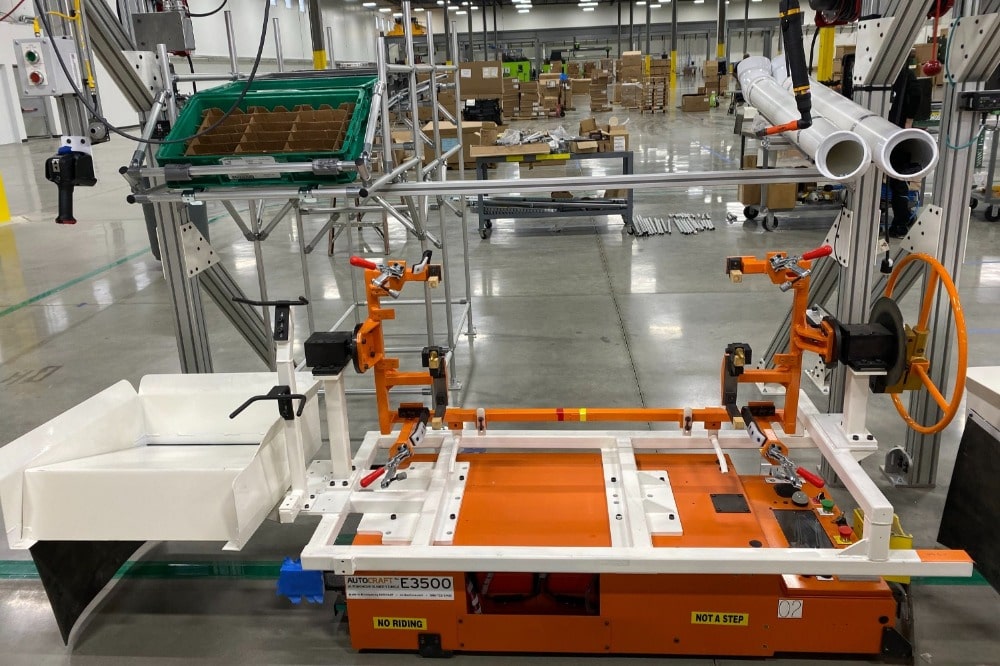
Companion Frames, Custom Dollies, Dunnage Interfaces, & Build Surfaces & Skillets.
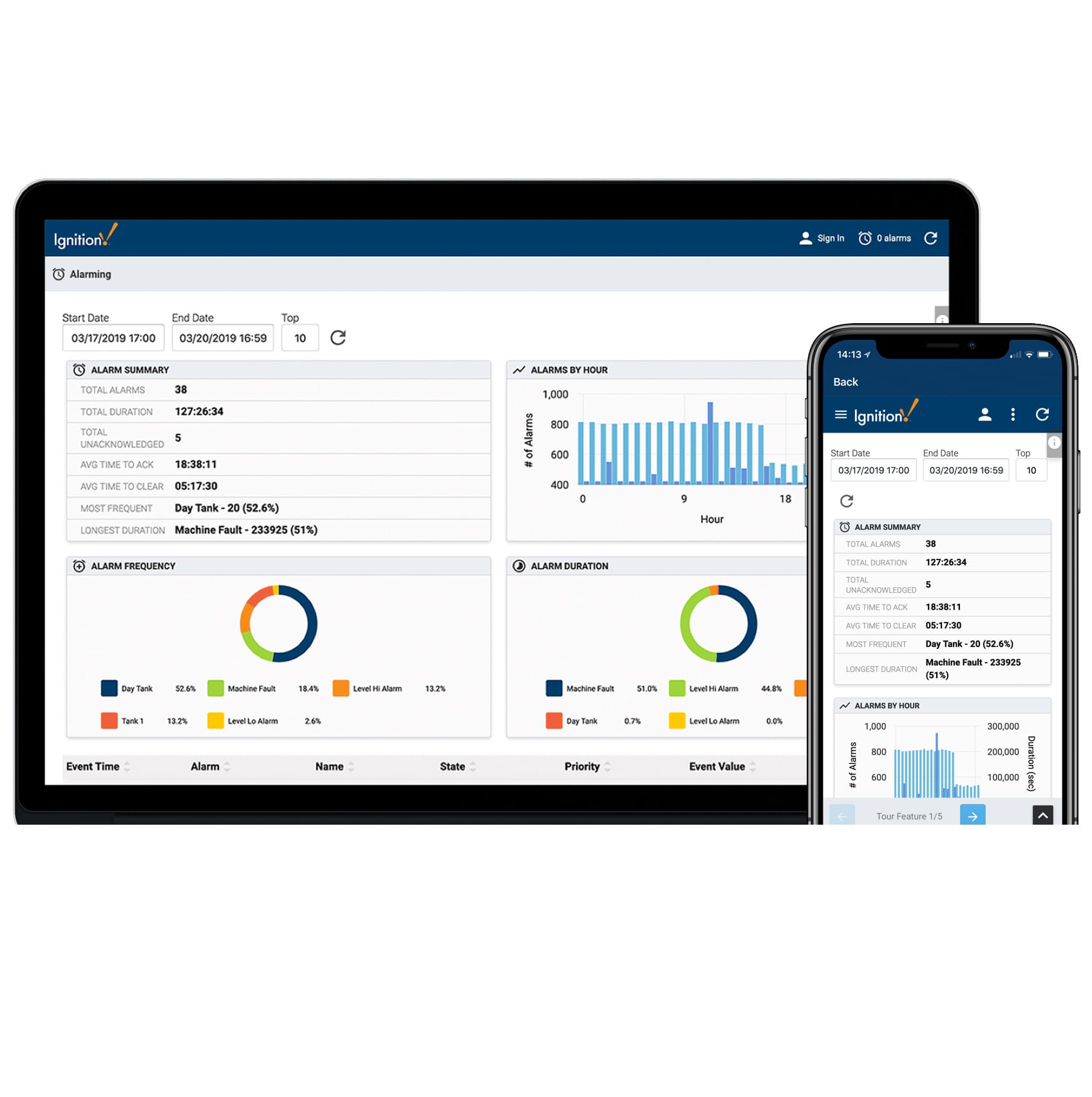
Ignition dashboards for viewing AGV fleet data at the Master Control Panel. Data exchange with your existing MES and SCADA systems, no rip and replace.
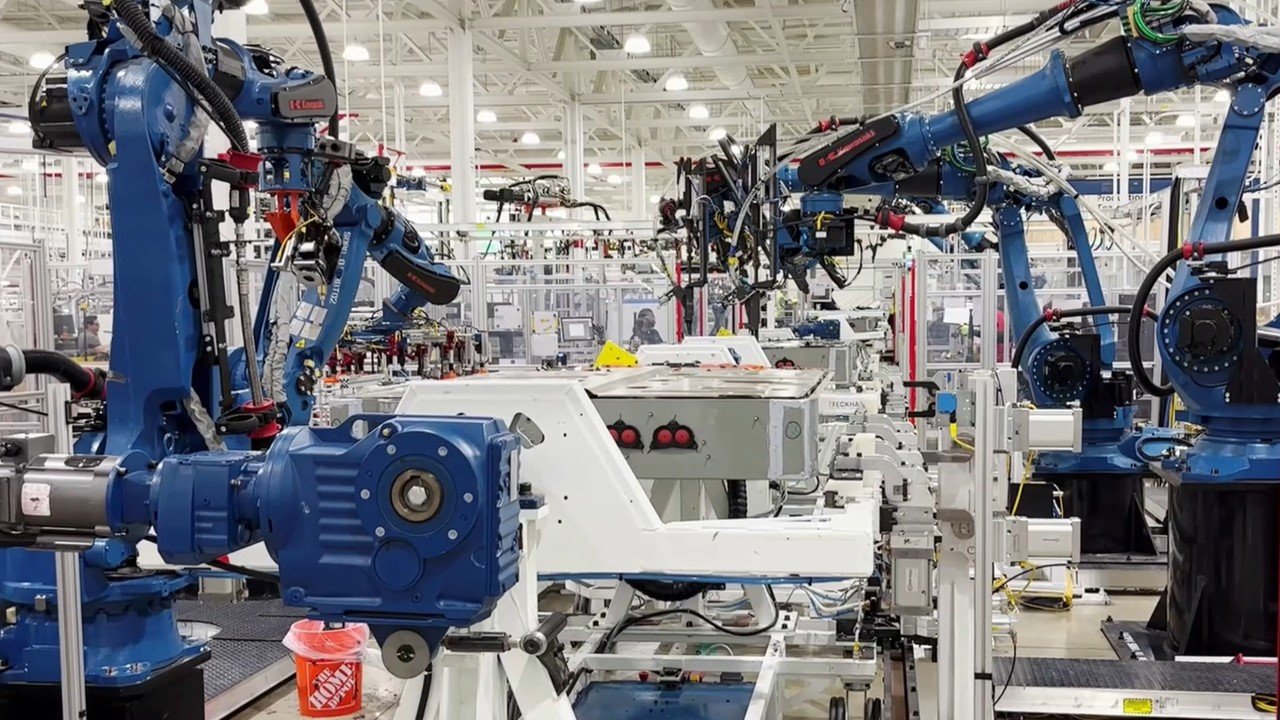
AGV Robotic Process Integration. Certified Kuka, Fanuc, Yaskawa, & UR Integrator.
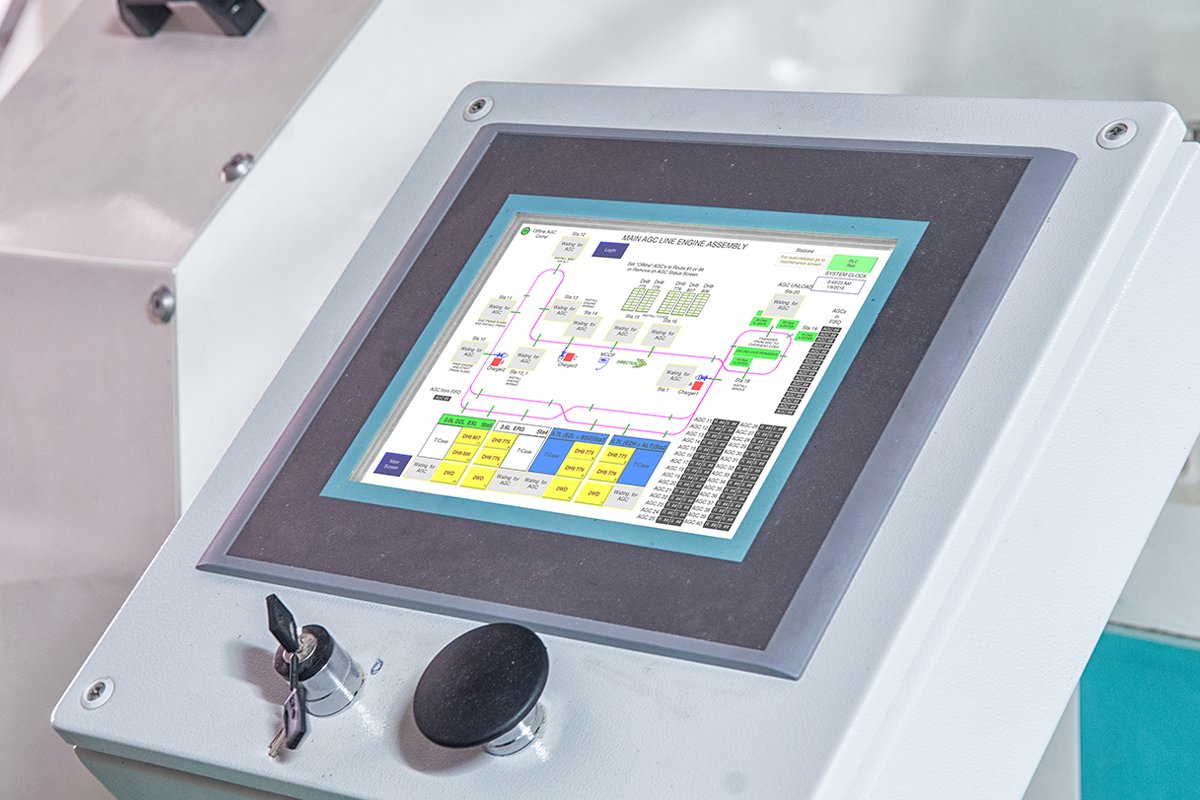
Master Control Panels for PLC-based Integration to other equipment and systems.

Integrated Lifts, Lazy Susans, & Powered Trunnions to reorient product for assembly line workers.
AGV Reference Videos
Standard & Custom AGVs
Optimize material flow, reduce manual handling, and improve safety
Super Payload AGV
Engineered to maneuver massive payloads of up to 70,000 lbs
AMR / AGV Robot Interaction
Enable high precision plastic welding with AMR / AGV robot interaction
Automated Handoffs from AGV to Positioner
Transform your fabrication with automated handoffs from an AGV to a headstock/tailstock positioner
Mfg with AGVs
Reimagine your assembly line with complex assembly and conveyance
AGV Tapeless Navigation
Easily adapt to unforeseen changes with tapeless navigation system
Recent Articles
News and thought leadership from the front lines of AGV implementation
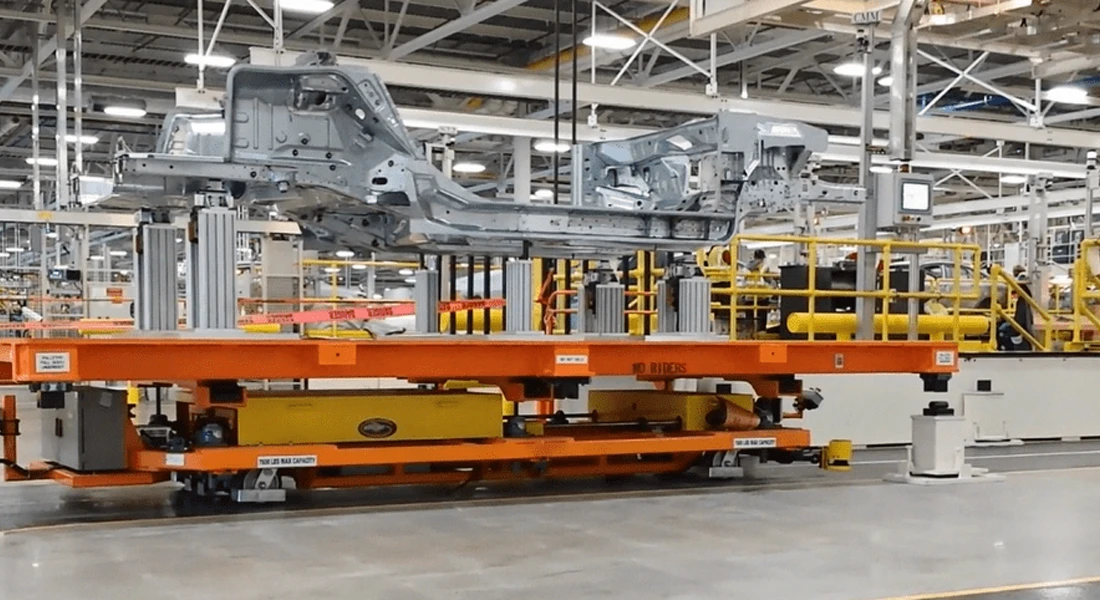
AGVs for Automating Heavy Load Manufacturing Conveyance
Moving a 20,000 lb vehicle body is a different job from delivering a tote of parts. This guide covers how heavy-duty and unit load AGVs are engineered, how they compare with towlines, AMRs and RGVs, and what you need to specify a heavy load system.
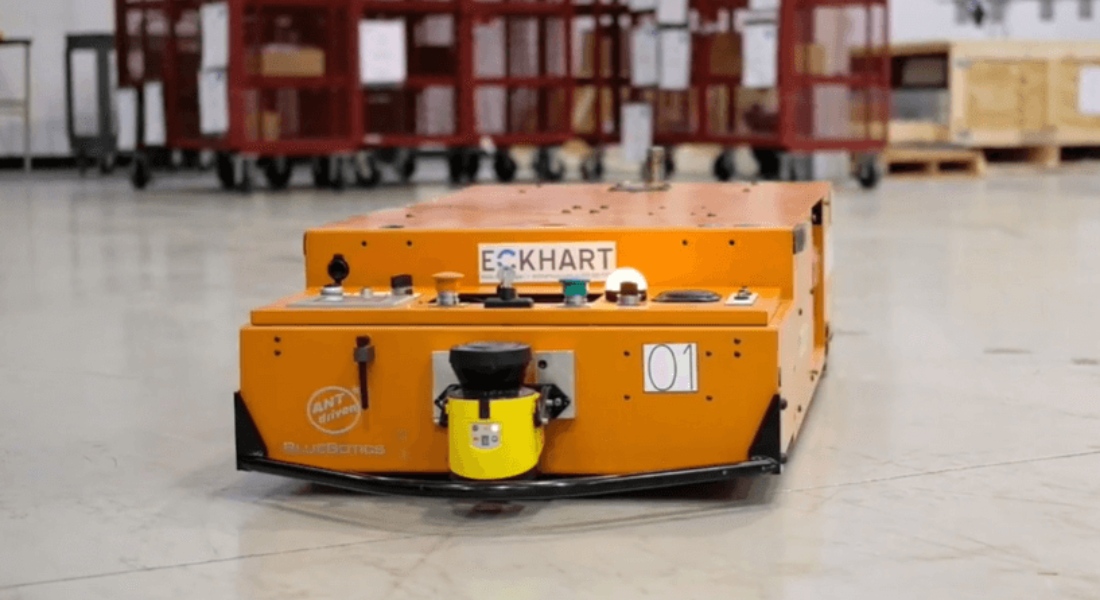
Getting Started with Mobile Robotics – What the Experts Want You to Know
Which processes should you automate first, and which vehicle should you start with? Three mobile robotics specialists share where AGVs and AMRs deliver the fastest wins, how to measure ROI, and the common mistakes that derail early projects.
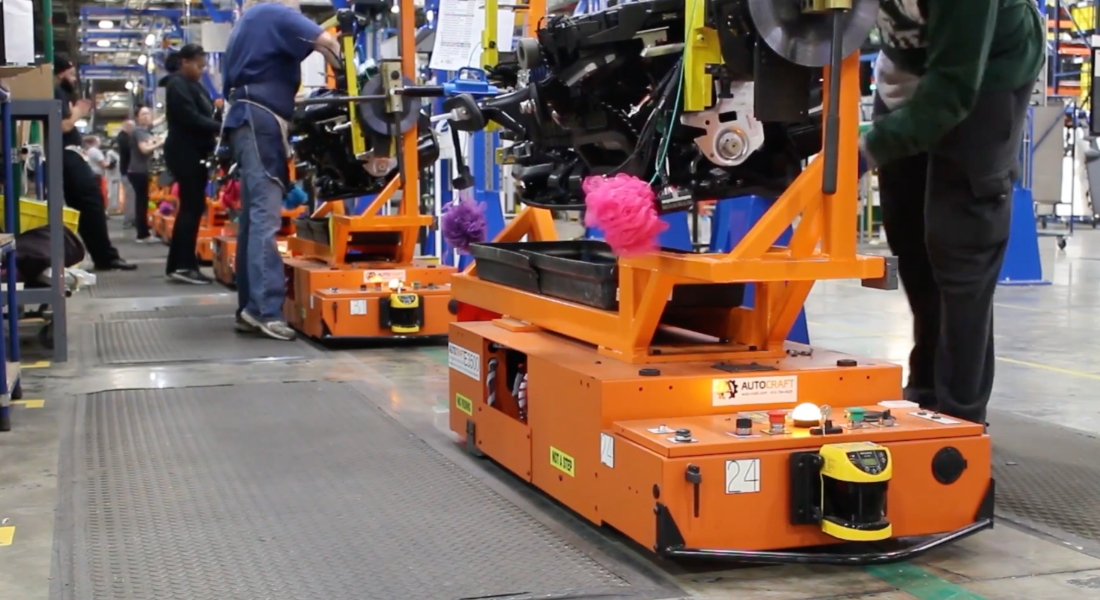
AGV Case Studies
Real AGV projects, scoped and built by the engineers who designed them.
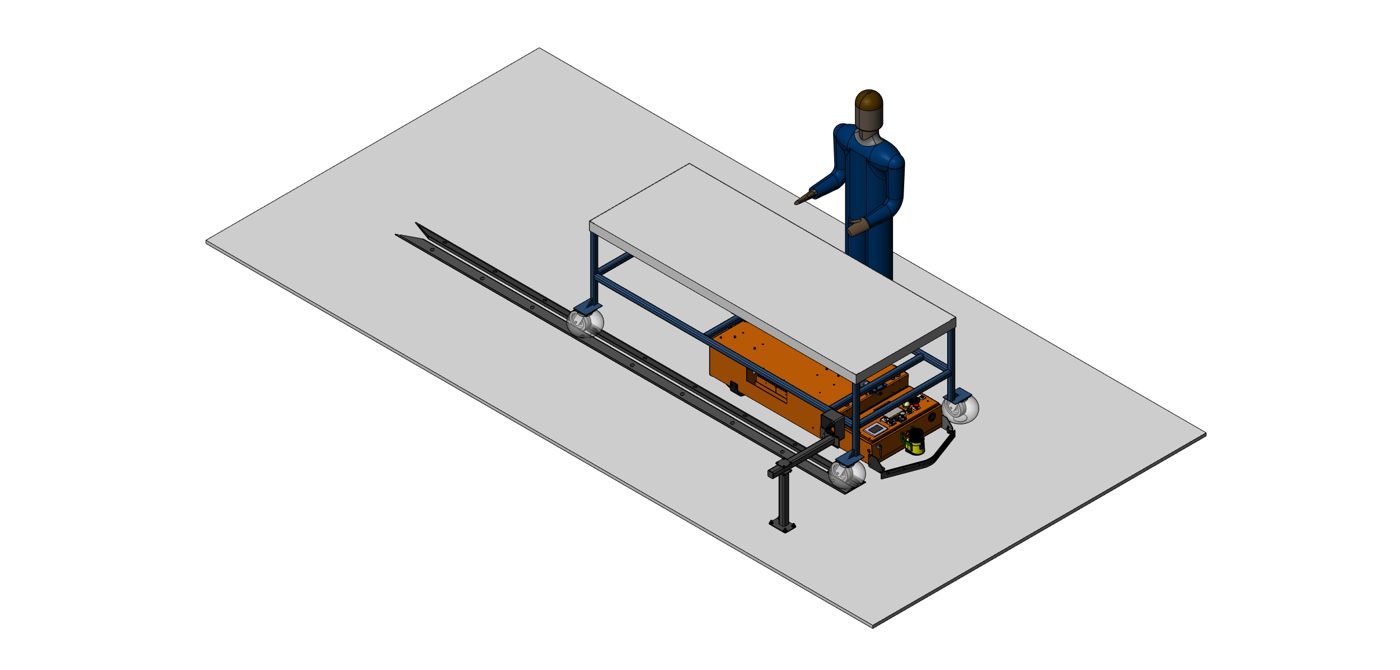
AGV Material Flow for a Building Products Manufacturer
A building products manufacturer was moving every staging cart by hand or fork truck. Invio scoped an AGV system around the carts it already owned and the floor it already had. Delivery labor dropped from three people per shift to none, at roughly 20% below earlier quotes.
Autonomous Guided Vehicles – Frequently Asked Questions
An AGV (Automated Guided Vehicle) is a mobile platform used to transport materials, products, or assemblies throughout a manufacturing facility. AGVs follow programmed routes and automation logic to improve material flow, reduce manual handling, and increase production efficiency. In many applications, an AGV serves as both a conveyance system and a mobile assembly platform that supports manufacturing operations directly on the vehicle.
AGVs typically follow predefined guidance paths such as tape, markers, or programmed routes, while AMRs (Autonomous Mobile Robots) dynamically navigate using sensors and environmental mapping.
AGVs are generally designed for heavy-duty manufacturing and assembly applications; Invio engineers custom AGVs for payloads up to 70,000 pounds.
The fixed-path nature of AGVs is part of what makes heavy payloads practical: a predictable, repeatable route means braking distances, floor loading and safety zones can be engineered with certainty.
AMRs are typically marketed for lighter material transport in warehouse and logistics environments, though heavier-capacity AMRs exist.
The right solution depends on the application, facility layout, payload requirements, and production goals.
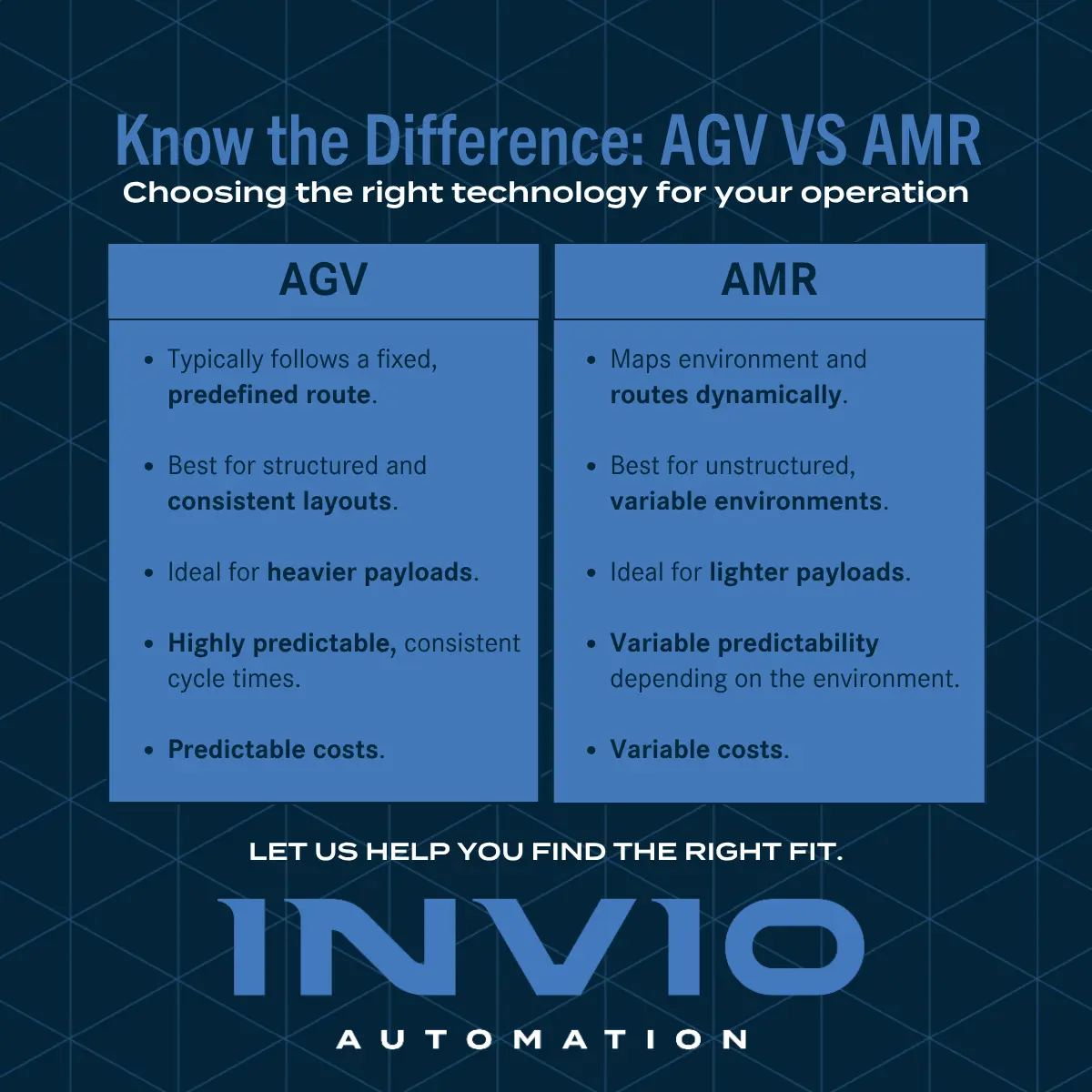
Invio works closely with customers to evaluate their manufacturing goals and recommend the best automation approach.
Compared to fixed conveyor systems, AGVs provide 360-degree access to the product, highly accurate positioning for robotic and automated processes, overhead tool accessibility, and greater manufacturing flexibility.
Invio designs custom AGVs for payloads up to 70,000 pounds, the maximum we can engineer a vehicle to carry. Payload capacity depends on the specific application, assembly requirements, and manufacturing process.
A unit load AGV carries its payload directly on the vehicle deck, on tooling, fixtures, or build surfaces mounted to the AGV, rather than towing it. Invio’s direct-load platforms range from the LD1500 (500 lbs on deck) to the HD66K (66,000 lbs on deck), and most can be configured with powered lifts, rotates, and trunnions so the unit load doubles as a mobile assembly station.
Automated Guided Robots for Heavy Manufacturing
Automated guided robots, often referred to as AGVs, are mobile robotic systems designed to transport materials across manufacturing environments safely and precisely. In AGV automation, each autonomous guided vehicle follows defined logic and routes to streamline internal logistics.
While many evaluate automated guided robots when assessing robotic transport solutions, the term “AGV” is widely used in industrial automation. In practice, both describe guided, programmable vehicles that follow defined navigation paths to automate internal logistics with dependable AGV systems.
Our platforms are engineered for heavy-payload applications and integrate with assembly lines, robotic cells, conveyors, and automated workstations. Whether you need fixed-path navigation, advanced sensor-based guidance, or interaction with AMR docking systems, our autonomous guided vehicle solutions pair AGV robotics with scalable AGV systems. As a US AGV manufacturer and integrator, Invio supports the full lifecycle, from vehicle design and build through fleet software, spare parts, and service.
Speak to an Application Engineer today.
Connect with an Invio engineer at any point in your project process. We can quickly provide pricing and technical guidance to help accelerate your AGV exploration or provide actionable proposals if your requirements are known.