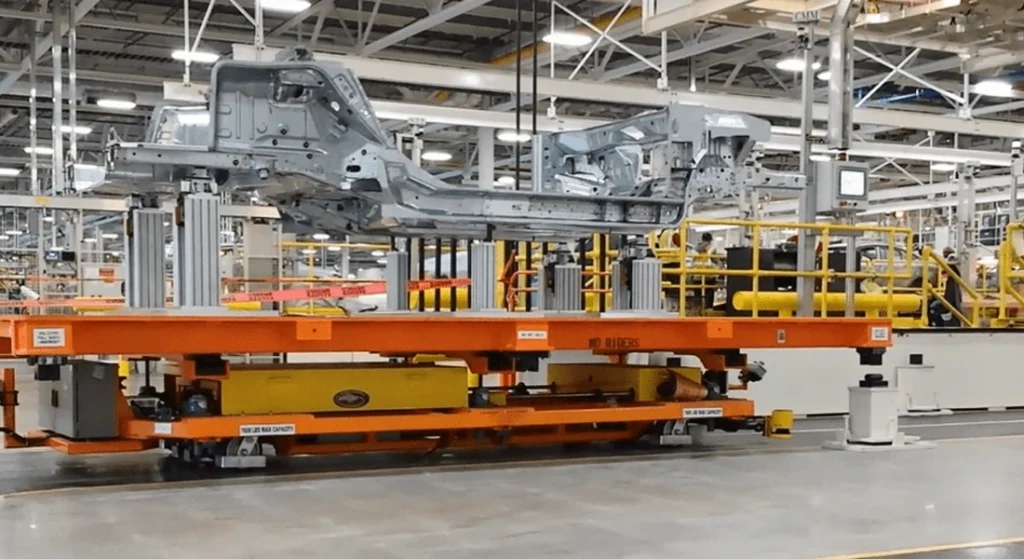

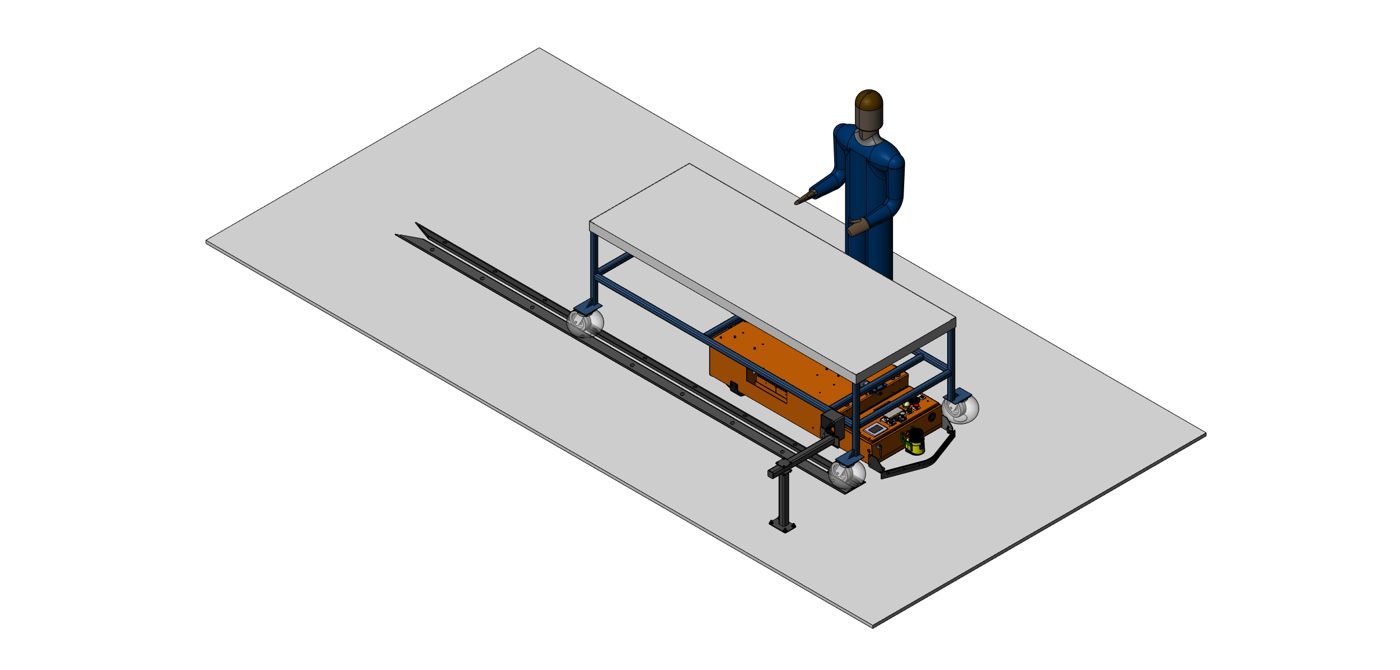
A multi-site building products manufacturer wanted its material staging carts moved by AGV instead of by hand and fork truck. A two-day engineering session with the plant’s logistics chief produced a future-state material flow, 3D concepts that worked with the carts already on the floor, and a layout that could go in without moving a single fixed asset.
At a glance
CustomerPrivately owned, multi-site building products manufacturer
ChallengeEvery cart transfer from staging to production was done by hand or by fork truck
EngagementEnd-to-End Opportunity Assessment, narrowed to one priority project
SolutionTunneling AGVs built around the existing staging carts
OutcomeDelivery labor cut from 3 FTE to 0, with total system cost roughly 20% below prior evaluations
The customer
A privately owned manufacturer of construction products with several plants. Its engineering team was sized for keeping production running, not for scoping an automation project on the side. The company knew what it wanted to automate. What it didn’t have was the bandwidth to define the system properly, or much confidence that the evaluations it had already paid for were the right answer.
The problem
Material staging carts had to get from staging to the value-adding zones around the plant, and every transfer was manual. Fork trucks ran through production areas all shift. That meant traffic, the safety exposure that comes with it, and direct labor spent on deliveries that added nothing to the product.
The problem had been looked at before. The proposals that came back specified AGV systems that needed new carts, new interfaces or relocated equipment to work, which pushed the cost up and the payback out.
What Invio did
Invio ran an on-site engineering session with the plant logistics chief. The starting point was the flow, not the vehicle: which carts move where, how often, in what sequence, and which of those moves sit on the critical path. From that the team defined a future-state material flow for the facility and then worked the AGV around it.
Three decisions came out of the workshop and shaped everything after it.
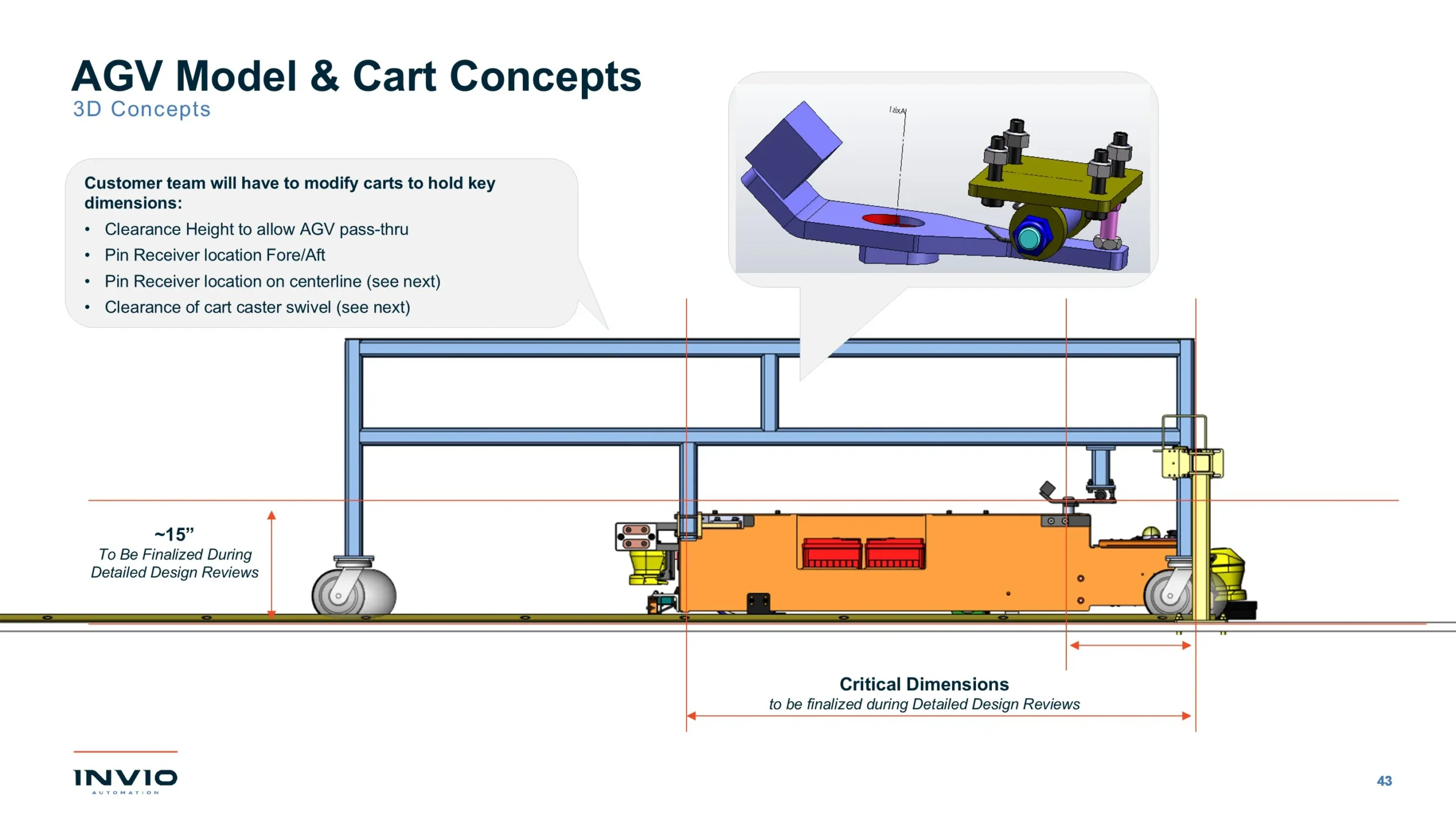
Keep the existing carts. The 3D concepts were built around a tunneling AGV that drives under a cart, lifts it and moves it, so there was no cart replacement program and no change to how operators load.
Design to the footprint as it stood. The 2D layout drawing placed routes, pick-up and drop-off points and charging so that nothing fixed had to move. That is the difference between an installation that fits in a shutdown weekend and one that needs a production reshuffle.
Simplify. Working the process through with the people who ran it turned up several places where the earlier evaluations had specified more than the job needed. Taking those out took cost out of the system without taking capability out.
Throughput simulation then confirmed fleet size and cycle times against run-rate volume before anything was priced.
Results
The delivery process that had needed three people per shift now needs none. Direct labor on material deliveries went from 3 FTE to 0 with run-rate production unchanged, because the AGV fleet took over every non-value-adding transfer between staging and the value-adding zones. Those hours went back into production.
The system also cost less than the customer had been told to expect. Keeping the existing carts, designing to the existing footprint and removing scope the earlier evaluations had added without need brought total system cost roughly 20 percent below the prior evaluations by others. Same job, smaller bill, shorter payback.
Fork-truck traffic through the production areas the carts served was designed out of the delivery process, along with the safety exposure that went with it. Because routes, stations and charging were placed around the existing fixed assets, installation was a controlled changeover rather than a plant reshuffle.
Fleet size and cycle times had been validated in simulation before the system was priced, so the numbers above were tested in the model before they were committed to in a quote.
Invio then designed and built the AGV system, carrying the layout, concepts and simulation from the engagement straight into detailed design.
The engineering behind it
AGV process definition, controls system architecture, HMI and fleet management, tunneling AGV carts, throughput simulation, 2D layout creation.
What this engagement was
An End-to-End Opportunity Assessment that narrowed to a single priority project: workshop on site, engineering at Invio, concepts and layout, simulation, budgetary estimate. It is the shape most Factory of the Future engagements take when a customer already knows the problem and needs it scoped by people who will have to build the answer.
Factory of the Future
Know the problem? Get it scoped by the people who’ll build it.
This was an End-to-End Opportunity Assessment that narrowed to a single priority project: workshop on site, engineering at Invio, concepts and layout, simulation and a budgetary estimate. It’s the shape most Factory of the Future engagements take when a customer already knows the problem. Start with a complimentary 30-minute consult with the team.